CH 1:
Human Body Orientation
A.
_________________________: study of structure of body parts and
their relationship to one another
1.
_________________________ or macroscopic anatomy: study
of large body structures
a.
regional anatomy: all structures in one section of the body
at a time
b.
systemic anatomy: studied one system at a time
c.
surface anatomy: study internal structures as they relate
to overlying
surface
2.
_________________________ anatomy: need the use of
microscopes to study
structures
a.
_________________________: study of cells
b.
_________________________: study of tissues
3.
developmental anatomy: traces changes through life span
a. _________________________: developmental changes
before birth
4.
diagnostic anatomy
a. pathological anatomy: changes caused by disease
b. radiographic anatomy:
1)
x-ray: bones appear white, gas appears black,
viewed
on fluoroscope
2)
CT or CAT (computed tomography): cross-section
views
3)
PET (positron emission tomography): show
metabolic
process with radioisotopes
4)
MRI (magnetic resonance imaging): contrast
images
of soft tissues, with magnetic fields
5)
ultrasound or sonography: high frequency sound
waves,
safe, inexpensive
c.
molecular biology: molecules, DNA
B. _________________________:
study of functioning of body parts
II. hierarchy of structural organization
A. chemical level
1.
atoms
2.
molecules
B.
_________________________: smallest unit of living things
C.
_________________________: groups of similar cells with a common
function
1.
_________________________: covers body surface and lines
cavities
2.
_________________________: causes movement
3.
_________________________: supports body and protects
organs
4. _________________________:
rapid internal communication by
transmitting electrical
impulses
D.
_________________________: made of at least 2 tissue types
E.
_________________________: organs work together for a common
purpose (MR RED IS NICE)
1.
_________________________: movement, produces heat
2.
_________________________ system: provides oxygen,
removes carbon dioxide
3.
_________________________: produces offspring, hormones,
mammary glands nourish
young
4.
_________________________ (urinary): eliminates N wastes,
regulates water,
electrolytes, pH balance
5.
_________________________: breaks down food, absorption,
eliminate indigestible
wastes
6.
_________________________: skin, covers body, protects from
injury, cooling, heating
7.
_________________________: protects and supports body
organs, forms blood
cells, stores minerals
8.
_________________________: fast-acting control of body
systems
9. _________________________
(lymphatic): protects against
foreign bacteria,
returns excess fluid to blood
10.
_________________________: transport blood, gasses,
nutrients
11.
_________________________: produce slow-acting hormones
regulate body systems
F. organism: living being
III. maintaining life
A. functional
characteristics
1.
maintenance of boundaries for a stable internal environment
2.
movement, manipulate environment, contractility
3.
responsiveness or irritability: react to stimuli
4.
digestion: break down and utilize food
5.
metabolism: chemical reactions within body, regulated by
hormones
6.
excretion: remove wastes from the body
7.
reproduction: cell division, new organism production
8.
growth: increase in size of a body part or organism
B. survival needs
1.
nutrients
a.
carbohydrates: major fuel energy
b.
proteins: build cell structure
c.
fats: cushion body organs, insulation, high energy storage
d.
oxygen: chemical reactions that release energy
e.
water: needed for chemical reactions, secretions,
excretions
2.
body temperature: generated by muscular activity
IV. _________________________: ability to maintain stable internal environment,
dynamic
equilibrium
A. general
characteristics of control mechanisms by intercellular
communication
1.
_________________________: sensor monitors stimuli, sends
information to
2.
_________________________: determines set point
(acceptable range),
determines response
3.
_________________________: provides means for control
center's response
B.
_________________________: output decreases original stimulus or
reduces it. MOST homeostatic responses involve negative
feedback.
C.
_________________________: exaggerate original stimulus, ex)
oxytocin promoting labor, clotting
V. language of anatomy
A.
_________________________: body erect, feet slightly apart, palms
forward, thumbs out
B. directional terms
1.
_________________________ (cranial) – means toward the
head vs.
_________________________ (caudal) – means toward
the tail
2.
_________________________ (ventral) – toward the belly vs.
_________________________
(dorsal) – toward the back
3.
_________________________ (mid line) vs.
_________________________
(side)
4.
_________________________: in the middle, between 2 other
structures
5.
_________________________ (close to body) vs.
_________________________
(distant)
6.
_________________________ (external) vs.
_________________________
(internal)
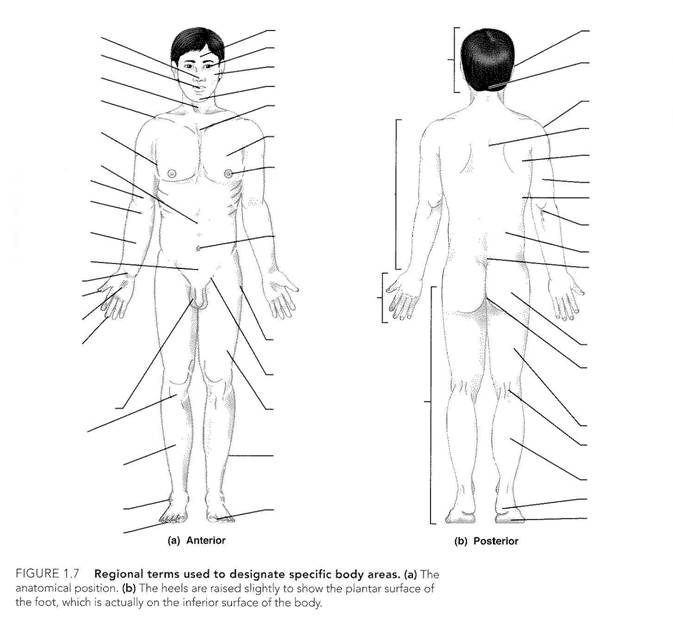
C. regional terms
1.
_________________________: main axis of body, head, neck,
trunk
2.
_________________________: appendages
3. LEARN fig. 1.7 p. 14
D. body planes and
sections
1.
_________________________: divides body into right and left
parts
2.
_________________________ or coronal: divide body into front
and back
3.
_________________________ or horizontal: divides body into
top and bottom (cross
section)
E. body cavities and
membranes
1.
_________________________ cavity
a.
cranial cavity
b.
vertebral or spinal cavity
2.
_________________________ cavity
a.
_________________________ cavity
1)
_________________________ cavity: lungs
2)
_________________________
a) pericardial
cavity: heart
b.
diaphragm: separates cavities
c.
_________________________ cavity
1)
_________________________ cavity: stomach,
intestines,
spleen, liver
2)
_________________________ cavity: bladder,
reproductive organs, rectum
3)
9 abdominopelvic regions
a)
_________________________: over navel
b)
_________________________: upon
stomach
(above navel)
c)
_________________________: below
umbilical
d) right and left
______________________:
iliac
(hip bone)
e) right and left
______________________:
low
back
f) right and left
_________________________:
(cartilage)
under ribs
4)
quadrants: right and left refer to subject's right and
left,
not yours
a. left lower quadrant, left upper quadrant
b. right lower quadrant, right upper
quadrant
3.
_________________________ in ventral cavity: double layered
membrane around organs
a.
_________________________ membrane: lines cavity
walls
b.
_________________________ membrane: covers organ
c.
serous fluid: allows organs to move without friction
4.
other body cavities
a.
oral and digestive cavities
b.
nasal cavity
c.
orbital cavities (eyes)
d.
middle ear cavities
e.
synovial cavities (joints)